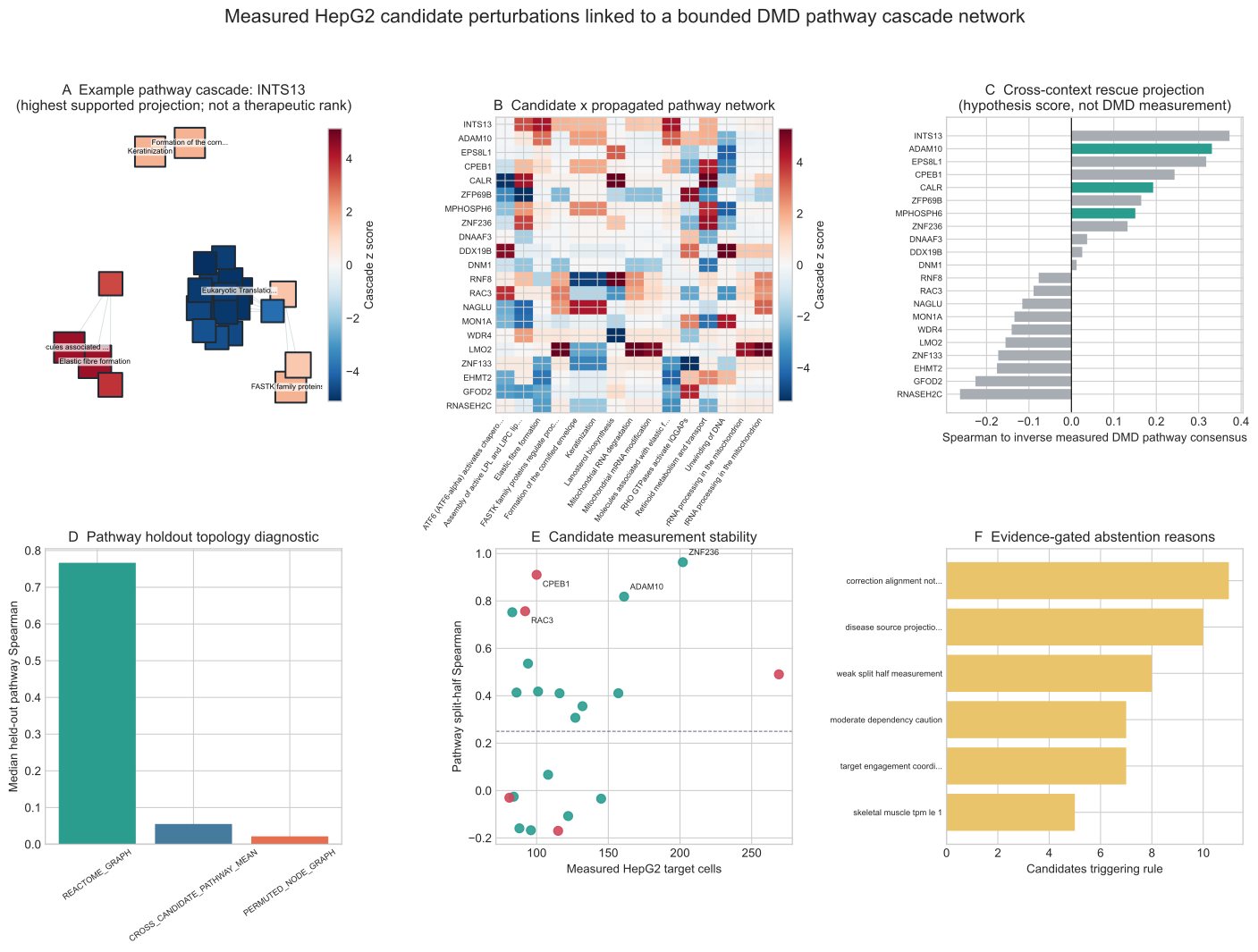
| PERT:ZNF133 → ASSAY:HEPG2_CRISPRI | observed response substrate | observed same assay | Processed HepG2 CRISPRi response vector exists for ZNF133. | None for same-assay evidence; DMD transfer still locked. |
|---|
| PERT:GFOD2 → ASSAY:HEPG2_CRISPRI | observed response substrate | observed same assay | Processed HepG2 CRISPRi response vector exists for GFOD2. | Audit pending external evidence before changing candidate status. |
|---|
| PERT:CPEB1 → ASSAY:HEPG2_CRISPRI | observed response substrate | observed same assay | Processed same-assay response can seed a candidate hypothesis. | Run matched DMD/control myogenic perturbation before disease interpretation. |
|---|
| PERT:ZNF133 → ASSAY:MYOBLAST_CONTEXT_SCREEN | screened; no fusion hit | assessed no hit | ZNF133 was assessed in GSE293514 (positive-selection LFC -0.003533; FDR 0.999999) and did not meet the fusion-hit threshold. | Do not infer no DMD effect; test a prespecified endpoint in matched DMD/control myogenic cells. |
|---|
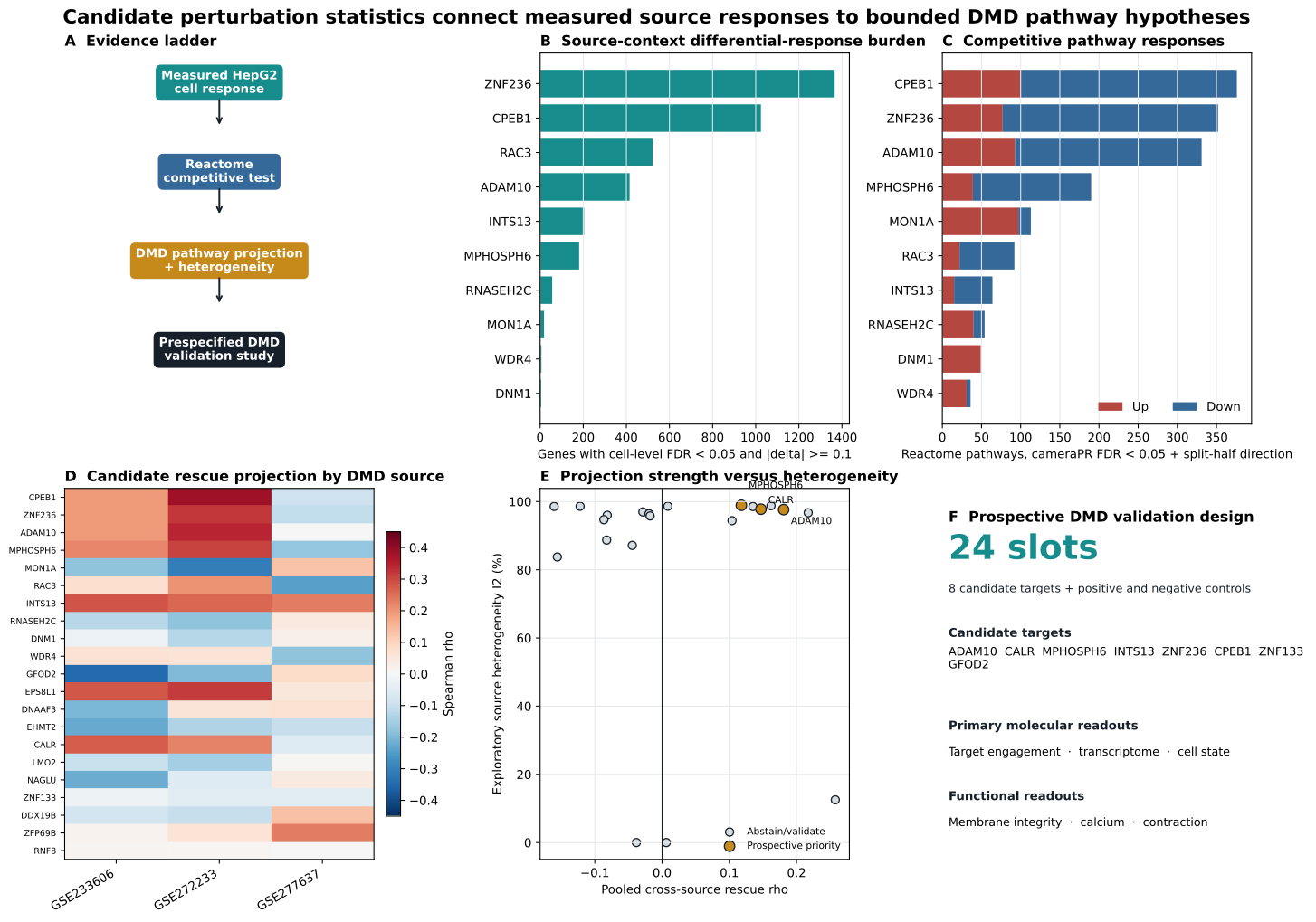
| ASSAY:HEPG2_CRISPRI → PROGRAM:DMD_SOURCE_STATE | cross-context comparison | contextual bridge | Same-assay response is compared against DMD source-linked programs only as context. | Establish transfer on a disease-relevant perturbation holdout. |
|---|
| PROGRAM:DMD_SOURCE_STATE → PROGRAM:NICHENET_TARGET_STATE | regulatory target-state bridge | inferred bridge | NicheNet target-state evidence supplies regulatory context. | Validate ligand-target or regulator-target mechanism in the declared cell context. |
|---|
| PROGRAM:DMD_SOURCE_STATE → PATHWAY:ECM_FIBROSIS | disease module placement | hypothesis | DMD source-state evidence motivates an ECM/fibrosis module. | Measure ECM or fibrosis readouts after candidate perturbation in DMD-relevant cells. |
|---|
| PROGRAM:NICHENET_TARGET_STATE → PATHWAY:IMMUNE_CROSSTALK | cross-cell regulatory hypothesis | hypothesis | Regulatory context motivates a cell-cell consequence module. | Test causal cross-cell outcome or coculture readout. |
|---|
| ASSAY:MYOBLAST_CONTEXT_SCREEN → PATHWAY:MYOGENIC_DIFFERENTIATION | myogenic bridge | contextual bridge | Fusion-screen context links candidate selection to myogenic biology. | Repeat with disease and matched-control perturbation outcome. |
|---|
| PATHWAY:MYOGENIC_DIFFERENTIATION → STATE:PROLIFERATING_MYOBLAST | reference start state | contextual bridge | Unperturbed human-myogenic trajectory anchors the starting compartment. | Add perturbation-conditioned cells at 0 h and early response times. |
|---|
| PATHWAY:MYOGENIC_DIFFERENTIATION → STATE:FUSING_MYOCYTE | transition context | contextual bridge | The platform can place a question on the myoblast-to-fusion axis. | Measure candidate-specific state transition in DMD and control cells. |
|---|
| PATHWAY:MYOGENIC_DIFFERENTIATION → STATE:MATURING_MYOTUBE | late state context | contextual bridge | The unperturbed trajectory includes a late reference state. | Add perturbation-conditioned myotube maturation outcomes. |
|---|
| PATHWAY:MITO_ENERGY → FUNCTION:CALCIUM_CONTRACTION | function-coupled hypothesis | hypothesis | Energy-state changes would need to be tied to contractile readouts. | Measure calcium handling and contraction under candidate perturbation. |
|---|
| PATHWAY:ECM_FIBROSIS → FUNCTION:MEMBRANE_INTEGRITY | matrix-function hypothesis | hypothesis | ECM remodeling could matter only if functional readouts change. | Measure membrane injury or repair endpoint in the same experiment. |
|---|
| STATE:FUSING_MYOCYTE → FUNCTION:FUSION_INDEX | state-to-endpoint mapping | contextual bridge | Fusion index is an interpretable endpoint for a myogenic transition. | Freeze endpoint, effect margin and analysis before outcomes are visible. |
|---|
| STATE:MATURING_MYOTUBE → FUNCTION:CALCIUM_CONTRACTION | late functional endpoint | hypothesis | Mature myotube state needs functional measurement before disease interpretation. | Run late myotube function assay with viability co-readout. |
|---|
| STATE:PROLIFERATING_MYOBLAST → FUNCTION:VIABILITY_TOXICITY | early safety gate | hypothesis | Any apparent mechanism is uninterpretable without viability/toxicity checks. | Include toxicity controls and reagent concordance in the pilot. |
|---|
| FUNCTION:FUSION_INDEX → GAP:DMD_PERTURBATION_TRUTH | requires DMD truth | missing validation | No candidate perturbation fusion outcome exists in matched DMD/control cells. | Generate a registered DMD/control myogenic perturbation outcome. |
|---|
| FUNCTION:MEMBRANE_INTEGRITY → GAP:DMD_PERTURBATION_TRUTH | requires disease functional truth | missing validation | No membrane integrity endpoint is measured for current candidate perturbations. | Add disease-relevant functional endpoint and analysis threshold. |
|---|
| FUNCTION:CALCIUM_CONTRACTION → GAP:DMD_PERTURBATION_TRUTH | requires muscle function truth | missing validation | No calcium or contraction outcome exists for the candidate perturbations. | Measure late function in a matched, preregistered assay. |
|---|
| GAP:DMD_PERTURBATION_TRUTH → GAP:PROSPECTIVE_REPLICATION | must replicate before claim | missing validation | The release has zero prospective predictions and zero returned outcomes. | Register prediction, run blinded outcome, then replicate independently. |
|---|
| ASSAY:MYOBLAST_CONTEXT_SCREEN → GAP:DMD_PERTURBATION_TRUTH | healthy context cannot substitute DMD truth | missing validation | The observed GSE293514 fusion endpoint is from healthy human myoblasts and is not a matched DMD perturbation outcome. | Generate a registered, donor-aware DMD/control perturbation study with molecular and functional readouts. |
|---|